0
O2
Xda
Announced
June 2002
Weight
201 grams
Codename
Wallaby
Features
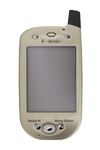
The O2 Xda (also known by its internal codename, the HTC Wallaby) was a key device in Microsoft’s smart-connected device history and a pivotal product for HTC. Up to that point, HTC had primarily been a "white-label" hardware manufacturer, also known as an ODM original design manufacturer, working with companies such as Compaq. The device became widely regarded as the first mobile phone designed and manufactured by the Taiwanese company, marking a major industry shift toward operator-branded devices. A later example was the Orange SPV.
At the time of the XDA’s release, the market was heavily fragmented between traditional voice-centric mobile phones and personal digital assistants (PDAs) which lacked a cellular connection. The Xda was a breakthrough product that successfully merged these two categories, earning its name by combining the "X" (representing convergence) with "da" (for digital assistant).
Working closely with Microsoft, HTC engineered the device to run the newly developed Pocket PC 2002 Phone Edition. By 2001 standards, cramming a full Windows CE-based operating system and a GSM radio into a device less than an inch thick was a significant engineering feat. It was quite heavy at 201 grams, but felt premium and industrial. The device ran on a 206 MHz Intel StrongARM SA-1110 microprocessor, initially backed by 32 MB of RAM (quickly increased to 64 MB), and featured a large 3.5-inch TFT resistive touchscreen capable of displaying 4,096 colours.
For early enterprise adopters, the Xda was a true mobile office. It featured a top-mounted SD/MMC card slot for memory expansion, an infrared (IrDA) port, and a robust stylus-driven user interface for navigating pocket versions of Internet Explorer and Outlook.
While O2 (then known officially as mmO2 plc) launched it as the Xda in the UK, the Wallaby platform's core strategy was versatility across carriers. Operators adopted the same hardware globally under various brands, most notably the T-Mobile MDA, the Siemens SX56, and the Qtek 1010.
Microsoft corporate vice president Juha Christensen and HTC worked closely to ensure the device could handle standard voice calls while simultaneously delivering pocket versions of Internet Explorer, Outlook, and Windows Media Player.
In addition to owning several examples of the O2 XDA, the Mobile Phone Museum also owns an extremely rare 3D-printed block model of the device, codenamed “Jazz”, manufactured in July 2001, nearly a year before the O2 XDA began shipping commercially. References to the “Jazz” device appear in early Microsoft/HTC internal documentation.