 0
0Siemens
A40
Announced
January 2001
Weight
122 grams
Features
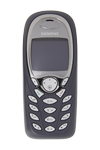
The Siemens A40 was introduced in early 2001 as an entry-level addition to Siemens’ "A-series" lineup. Positioned as a budget-friendly, no-frills mobile phone, it was designed to appeal to first-time mobile users and the prepaid market, where simplicity and durability were the primary selling points.
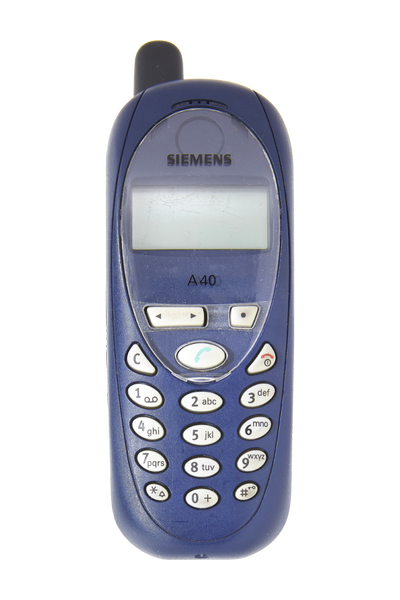
One of the A40's most defining characteristics was its focus on personalisation through "CLIPit" Folios. These removable, interchangeable front cover plates let users easily change the colour and style of their phone. While other manufacturers, like Nokia, were finding massive success with entirely removable Xpress-on covers, Siemens opted for a slightly different approach: the A40 featured a transparent area around the screen where users could insert different-coloured "folios" or cards to change the phone’s look. This made it a popular lifestyle accessory for younger users who wanted to match their device to their personal style without the expense of a high-end handset.
Technically, the A40 was very basic even for its time. It featured a small monochrome graphic display that could show only two lines of text plus a dedicated row of icons. The green LED backlight provided a classic late-90s/early-00s aesthetic. Unlike its more advanced siblings in the C and S series, the A40 lacked a built-in clock, alarm, or games—omissions that were increasingly rare by 2001. It did, however, support SMS text messaging and offered 15 pre-set ringtones.
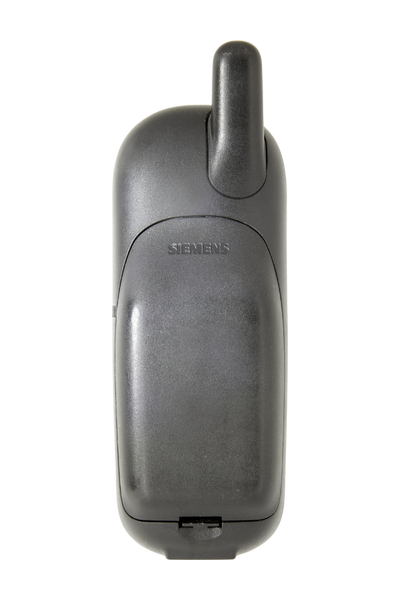
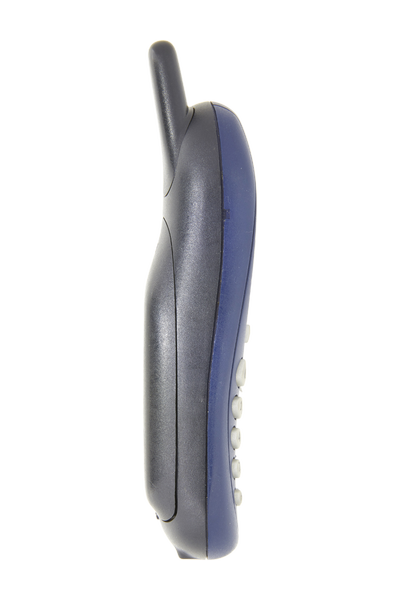
The device has a chunky design, with a depth of 27mm and a prominent external antenna, which was becoming an outdated design choice as internal antennas became the industry standard.
Despite its limited feature set, its rugged build and ease of use helped it carve out a niche in the European market. It was available in several vibrant colours, including Royal Blue, Raspberry Red, and Apple Green, further leaning into its identity as a fun, entry-level "people's phone."